Height approx. 14 cm.
Condition: Cracking.
Stig Lindberg (1916–1982) was a Swedish designer and illustrator. He served as Artistic Director at Gustavsberg Porcelain Factory from 1949 to 1957 and is best known for iconic tableware such as Adam, Berså, and Spisa Ribb. He also illustrated children’s books, including Lennart Hellsing, Nyfiken i en strut.
Lindberg studied at the Technical School in Stockholm and began his career at Gustavsberg in the 1930s, where he became a pupil of Wilhelm Kåge. His work is characterized by creativity, playfulness, and a lasting influence on Swedish design.
During the 1940s, Stig Lindberg gained recognition for his chamotte sculptures and faience, notably through the exhibition Faience Painted in Spring (1942). In 1949, he succeeded Wilhelm Kåge as Artistic Director at Gustavsberg, where he introduced many of his most iconic designs, including Berså, Spisa Ribb, Adam, and Domino.
Alongside his work in ceramics, Lindberg was active in glass, textiles, illustration, and industrial design, collaborating with companies such as NK, Kosta, Holmegaard, and Luma. From 1957 to 1972, he served as Head of Ceramics at Konstfack, influencing a new generation of designers. His work is distinguished by a playful, colorful, and expressive style that has become emblematic of Swedish design.
Height approx. 14 cm.
Condition: Cracking.
Stig Lindberg (1916–1982) was a Swedish designer and illustrator. He served as Artistic Director at Gustavsberg Porcelain Factory from 1949 to 1957 and is best known for iconic tableware such as Adam, Berså, and Spisa Ribb. He also illustrated children’s books, including Lennart Hellsing, Nyfiken i en strut.
Lindberg studied at the Technical School in Stockholm and began his career at Gustavsberg in the 1930s, where he became a pupil of Wilhelm Kåge. His work is characterized by creativity, playfulness, and a lasting influence on Swedish design.
During the 1940s, Stig Lindberg gained recognition for his chamotte sculptures and faience, notably through the exhibition Faience Painted in Spring (1942). In 1949, he succeeded Wilhelm Kåge as Artistic Director at Gustavsberg, where he introduced many of his most iconic designs, including Berså, Spisa Ribb, Adam, and Domino.
Alongside his work in ceramics, Lindberg was active in glass, textiles, illustration, and industrial design, collaborating with companies such as NK, Kosta, Holmegaard, and Luma. From 1957 to 1972, he served as Head of Ceramics at Konstfack, influencing a new generation of designers. His work is distinguished by a playful, colorful, and expressive style that has become emblematic of Swedish design.

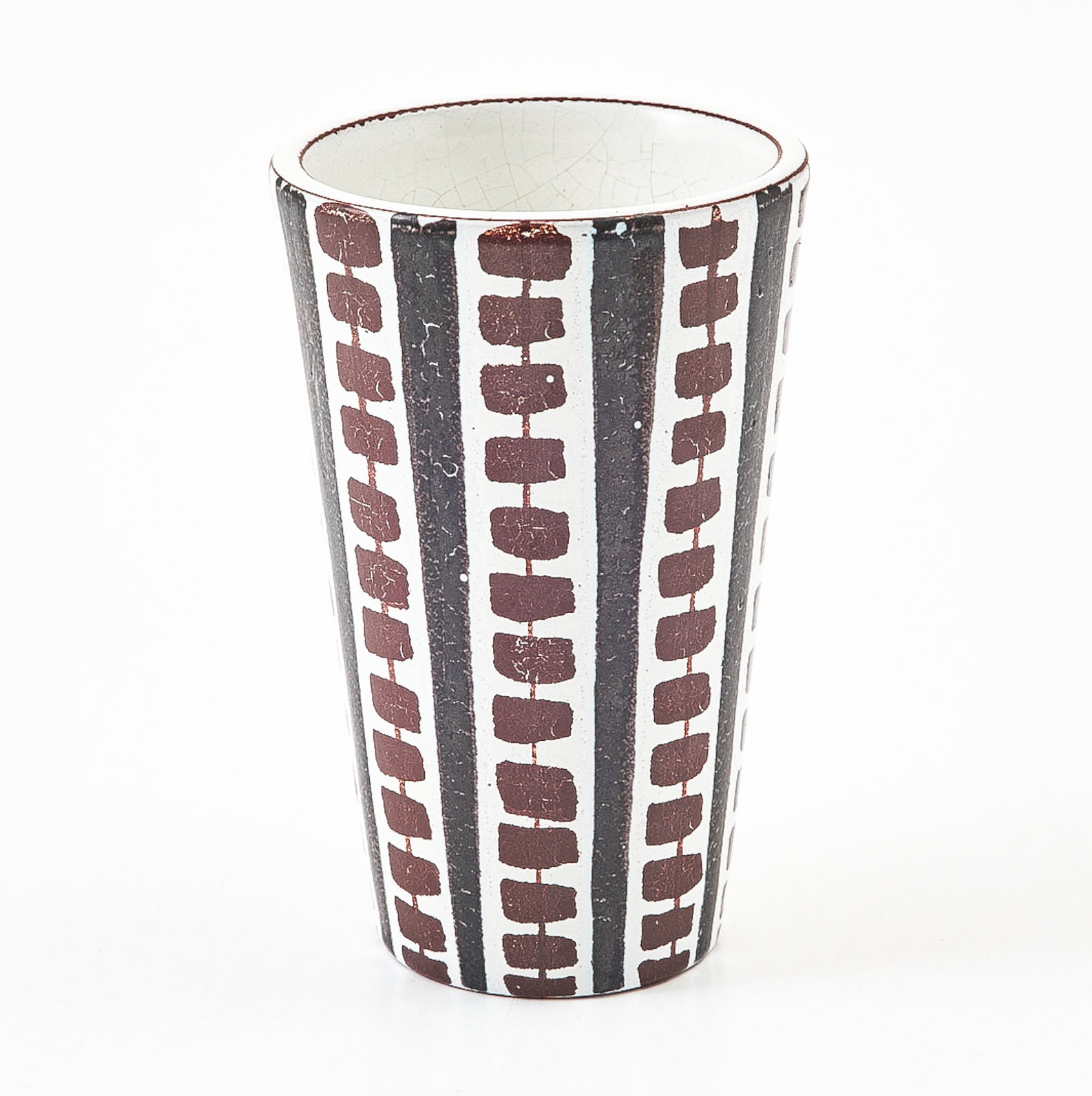 Image 1 of 3
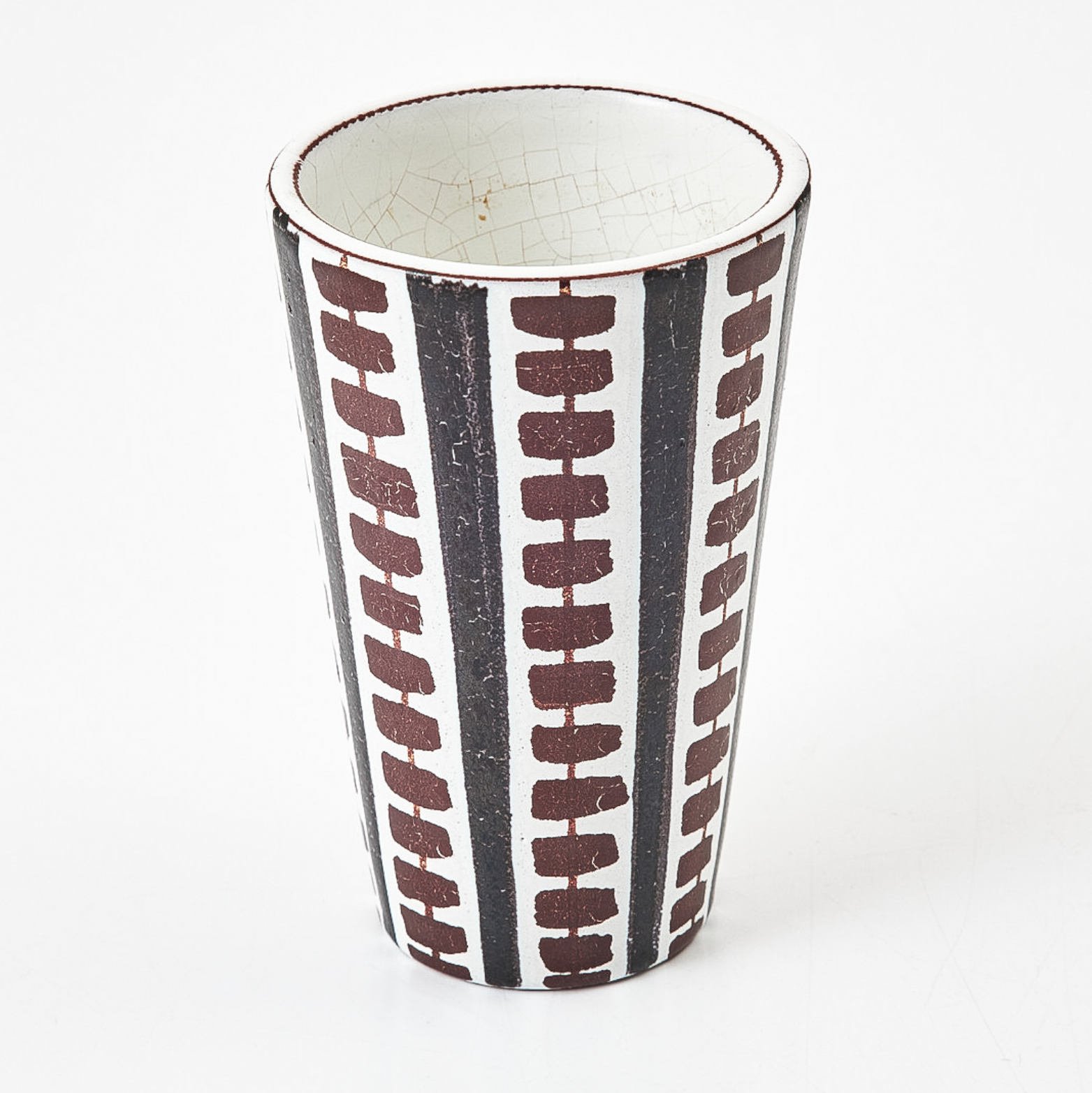 Image 2 of 3
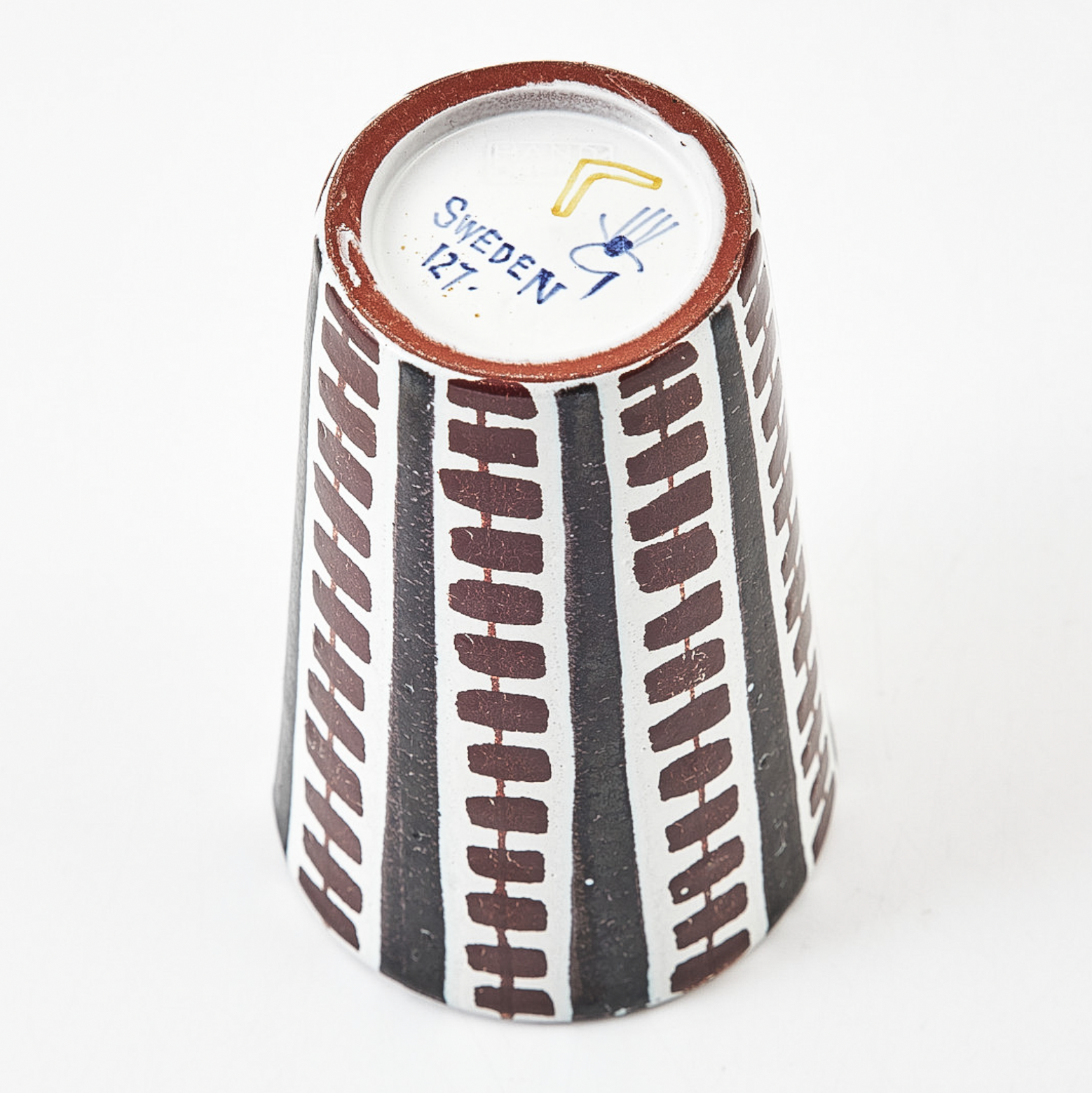 Image 3 of 3