
 Image 1 of 4
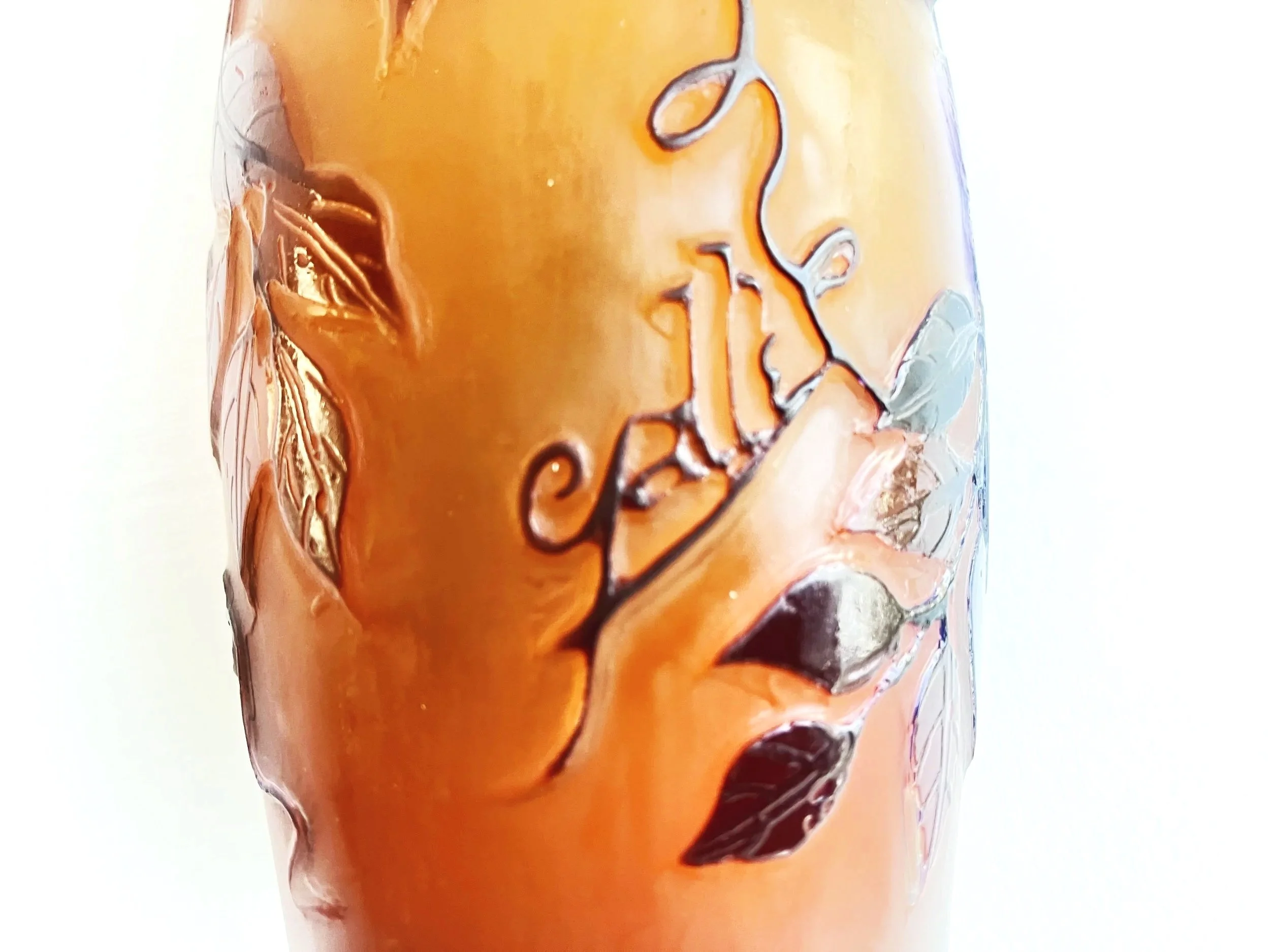 Image 2 of 4
 Image 3 of 4
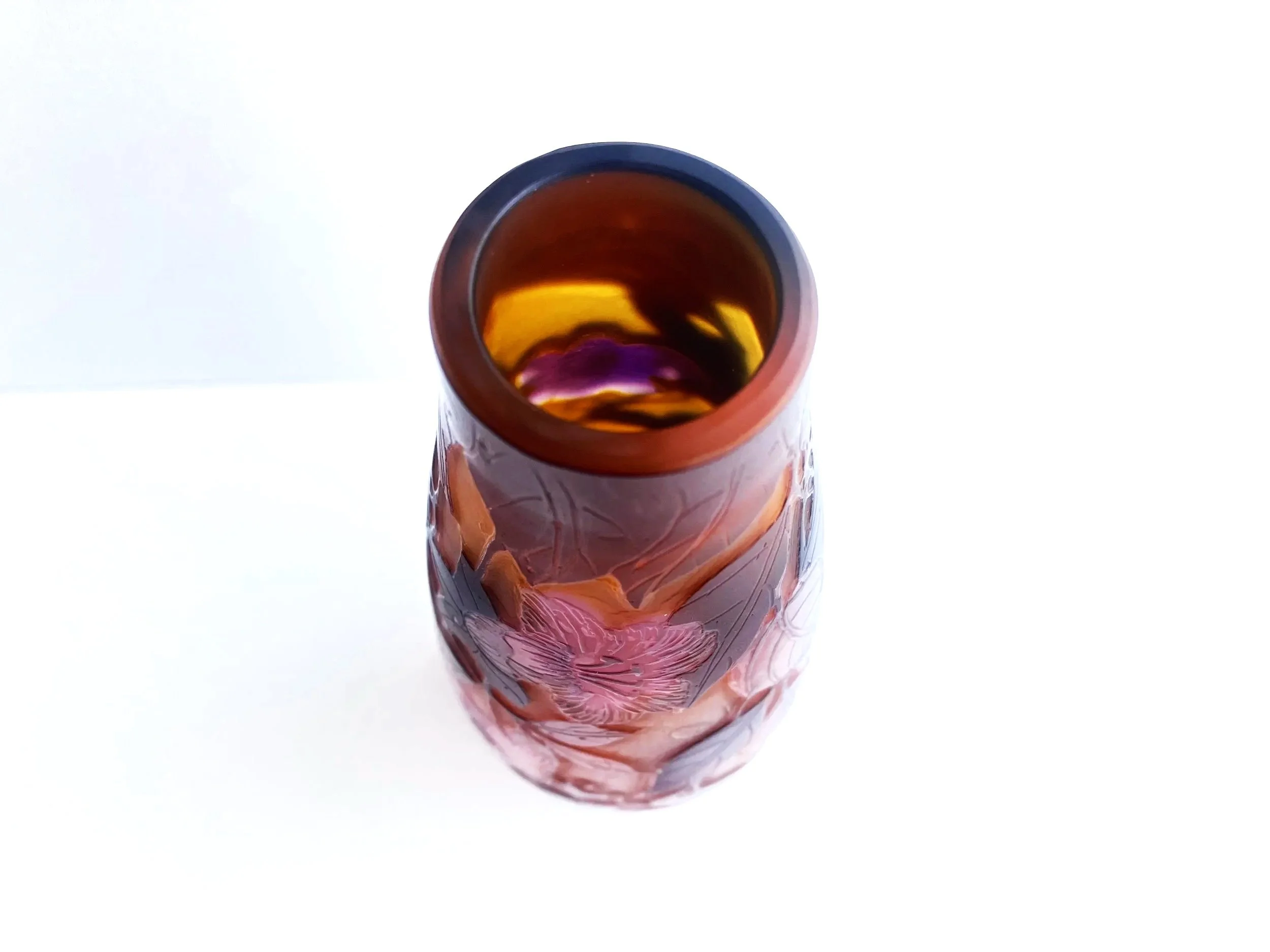 Image 4 of 4
Émile Gallé (1846–1904): A Master of Art Nouveau
Born in Nancy, France, Émile Gallé was the son of a successful glass and pottery entrepreneur. Unlike many artisans of his time, he received a broad academic education in philosophy, Latin, and French literature. This intellectual foundation deeply influenced his later artistic work, which often incorporated botanical and poetic themes.
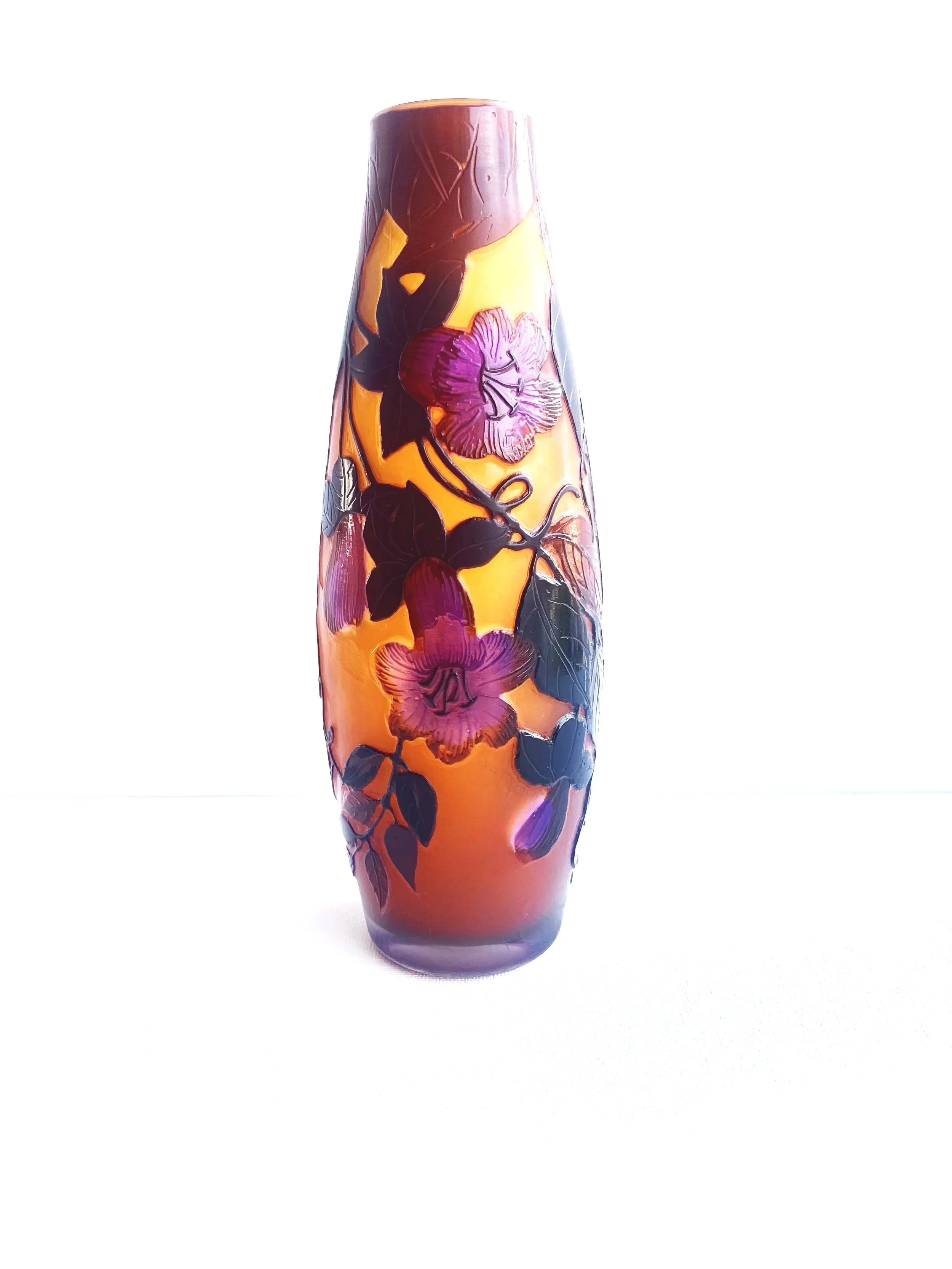
Gallé was a passionate botanist. His designs were famous for their intricate depictions of plants, insects, and flowers, often blending science with art. In 1898, he patented this "glass marquetry" technique, which involved pressing pieces of colored glass into the molten surface of an object to create layered, painterly effects. His work was characterized by experimental textures and deep, moody colors. Today, his pieces are displayed in major institutions like the Nationalmuseum in Stockholm and the Musée de l'École de Nancy
Émile Gallé (1846–1904): A Master of Art Nouveau
Born in Nancy, France, Émile Gallé was the son of a successful glass and pottery entrepreneur. Unlike many artisans of his time, he received a broad academic education in philosophy, Latin, and French literature. This intellectual foundation deeply influenced his later artistic work, which often incorporated botanical and poetic themes.
Gallé was a passionate botanist. His designs were famous for their intricate depictions of plants, insects, and flowers, often blending science with art. In 1898, he patented this "glass marquetry" technique, which involved pressing pieces of colored glass into the molten surface of an object to create layered, painterly effects. His work was characterized by experimental textures and deep, moody colors. Today, his pieces are displayed in major institutions like the Nationalmuseum in Stockholm and the Musée de l'École de Nancy